
Leaders From South Africa Inspire New Generation of Social Changemakers
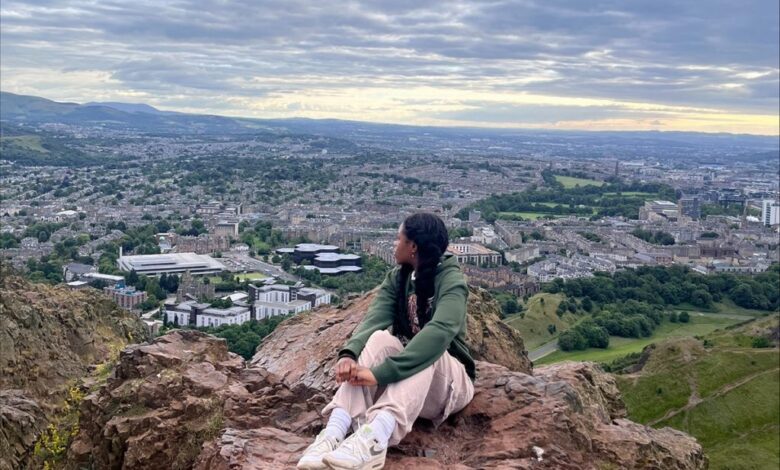
Olutoyin Green ’26 always knew she wanted to study abroad. But she wasn’t expecting to end up in South Africa—and she definitely wasn’t expecting to go there twice in one year.
Green is majoring in political philosophy; health humanities; and law, society and policy alongside a minor in public health in the Maxwell School of Citizenship and Public Affairs. Connecting her studies is a need to understand how massive systems impact everyday lives—and how everyday people can change those overarching structures.
Thanks to the University’s experiential learning and outreach initiatives, Green has had the opportunity to encounter both ends of this scalar spectrum. As an undergraduate research assistant with the Engaged Humanities Network, Green works with Southside Connections (SSC) to address social challenges through community organizing.
Her learning with this local, place-based collective action has been complemented by a summer internship at the Global Governance Institute through Syracuse Abroad’s European and Global Internship Program in Brussels, looking at a set of institutions and decision-making processes taking place at a very different scale. Green’s professional development experiences in Belgium included visits to NATO headquarters and the European Parliament alongside meeting experts from the United Nations.
Finding Her Niche Abroad
Even before heading to Brussels for her summer internship, Green planned a full-length semester abroad—something she’d been looking forward to since her freshman year. Initially, she planned on taking general electives at one of the European centers.
As she looked further into study abroad options, though, Green discovered World Partner programs, and “realized they would expose me to different cultures in a non-traditional way that was geared toward my passion.”
The SIT South Africa: International Relations in the Global South program offers students a chance to dive into global affairs from non-Western perspectives, considering such major international actors as the African Union and the BRICS block (Brazil, Russia, India, China and South Africa). The program immediately caught Green’s eye, and in spring 2025, she spent four months in Durban learning about the anti-apartheid movement and contemporary issues in post-colonial societies.
Experiential learning through trips to museums, workshops with local organizations and conversations with civil society leaders developed a lived understanding of multiscalar politics around the region, while three different homestays grounded Green in the country’s still-existing social disparities.
“I don’t have a favorite moment or memory,” Green says, “because the entire semester was so impactful, and everything I did—in and out of formal coursework—connected so powerfully.”
Learning From the Past to Reshape the Future
Throughout her coursework in South Africa, Green was especially moved by the reality that individuals who led the anti-apartheid movement are still alive and able to share their stories and strategies for changemaking. Throughout her studies investigating political, social and economic disparities between communities within the United States and around the world, Green has seen that change needs to happen—but very rarely found avenues to make that change.
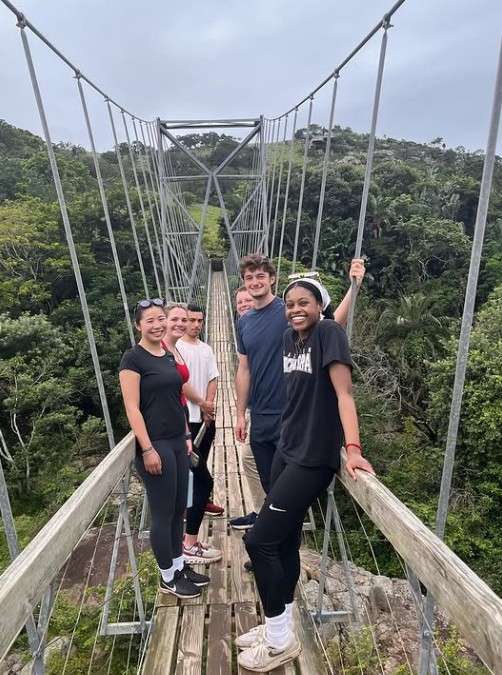
Inspired in large part by the “blueprint and hope” that she received from anti-apartheid leaders in South Africa, her senior honors thesis is now considering how social movements are sustained to effectively create meaningful change. Thanks to support from the Syracuse Office of Undergraduate Research and Creative Engagement (SOURCE), Green returned to South Africa over Thanksgiving break to lay the groundwork for empirical research informing her thesis.
The trip played a fundamental role in Green’s methodology. “Before going back and speaking with people informally, I had a singular idea of who I was going to interview,” says Green, having assumed she would focus on high-profile activists.
The informal conversations highlighted the intricacy of the movement as a whole—and just how intentional the role of doorknockers, knowledge generators, exiled individuals and other “behind the scenes” members of the movement were. Green now has a more multifaceted understanding of what social movements can look like, and who is involved.
And though she may not have a favorite memory from spring 2025, reuniting with her host family over Thanksgiving break was the personal highlight of her recent research trip, as well as sitting on the warm beach in November. “There’s nothing better than the water in Durban,” she says.
Story by Becca Farnum, community engagement specialist with Syracuse Abroad in London
Source link